A burst pipe at 2 AM. A toilet overflowing onto the bathroom floor. Water pouring through the ceiling from a broken fitting upstairs. These are the calls I receive every week from homeowners across Puchong — and the first few minutes after a plumbing emergency can make the difference between a quick repair and thousands of ringgit in water damage.
I have been responding to emergency plumbing calls in Puchong for over a decade, and the one thing I have learned is this: what you do before the plumber arrives matters just as much as what the plumber does when they get there.
Here is a step-by-step guide to handling a plumbing emergency calmly and effectively.
Step 1: Shut Off the Water Supply
This is the single most important action you can take. Every second that water continues flowing is more damage to your floors, walls, furniture, and electrical wiring.
If the leak is at a specific fixture
Look for the individual stop valve. For toilets, it is usually a small chrome valve on the wall behind or beside the toilet bowl. For sinks, check under the basin — there should be a valve on the cold and hot water supply lines. Turn the valve clockwise to shut it off.
If you cannot find the individual valve — or the leak is in the wall or ceiling
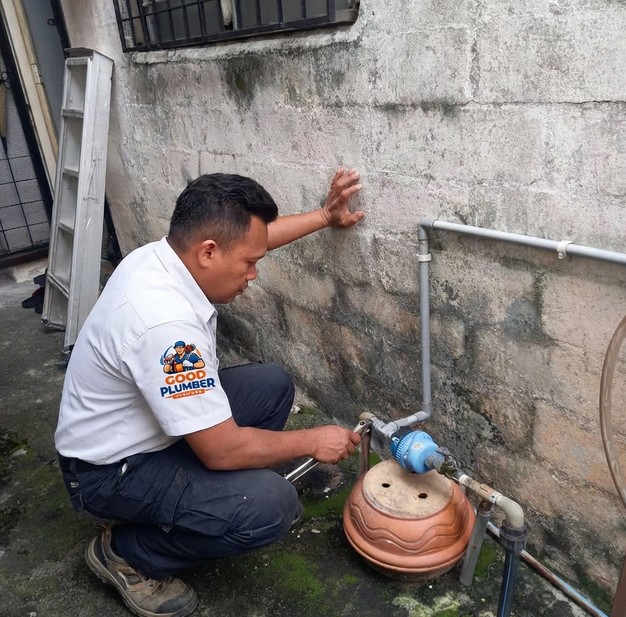
Go straight to the main shutoff valve. In most Puchong terrace houses and semi-detached homes, this is located near the water meter at the front of the property, usually in a small concrete box at ground level. Turn it fully clockwise. This will cut off all water supply to the house.
Toilet valve: Behind the toilet bowl, on the wall or floor. Sink valve: Under the sink basin, follow the flexible hose. Main valve: Near the water meter, front of property. Always turn clockwise to close.
Step 2: Turn Off the Electrical Supply if Water Is Near Wiring
Water and electricity are a deadly combination. If water is leaking through the ceiling, running down walls, or pooling on the floor near power sockets, switches, or appliances — turn off the electrical supply immediately.
Go to your main distribution board (DB box) and switch off the main breaker. If you can identify which circuit is affected, you can switch off just that circuit. But if you are not sure, turning off the entire supply is the safer choice.
Do not touch any electrical switches, sockets, or appliances that are wet or surrounded by standing water. Do not walk through standing water if you are unsure whether the electricity has been properly isolated.
If water is actively dripping onto your DB box or electrical panel, do not touch it. Call TNB (Tenaga Nasional) at 15454 or your building management to cut the supply from the main breaker externally. Your safety comes first — always.
Step 3: Contain the Flooding
Once the water supply is off and the area is electrically safe, your next priority is stopping the water from spreading further. Here is what works:
- Towels and old rags — pile them around the source of the leak to create a barrier and absorb standing water
- Buckets and basins — place them under active drips, especially from ceiling leaks, to prevent water from pooling on the floor
- Mop and squeegee — push standing water towards the nearest floor drain or out the front door
- Move valuables — shift electronics, documents, and furniture away from the wet area. Even a few metres can save them from water damage
For serious floods — ankle-deep water or more — open the front door and let it drain out naturally while you mop. In ground-floor units in Puchong apartments, water can pool quickly because there is nowhere for it to go. Prioritise getting it out before it seeps into neighbouring units.
Step 4: Document the Damage
Before you start cleaning up completely, take photos and videos. Use your phone to record:
- The source of the leak (or where you think it is coming from)
- The extent of the water damage — wet floors, stained walls, damaged furniture
- Any visible pipe damage, cracks, or broken fittings
- Your water meter reading (to help identify if there are hidden leaks elsewhere)
This documentation is useful for two reasons. First, it helps me diagnose the issue faster when I arrive — I can see what it looked like before you cleaned up. Second, if you have home insurance, these photos are critical for your claim. Many insurance policies in Malaysia cover water damage from burst pipes, but you need evidence.
Step 5: Open Taps to Drain Residual Water
After you shut off the main valve, there is still water sitting in the pipes throughout your house. Open the lowest tap in your home — usually the outdoor garden tap or a ground-floor sink — and let the remaining water drain out. This reduces the pressure in the system and can slow or stop an active leak.
If the problem is a burst hot water pipe, turn off your water heater (Joven, Panasonic, or whichever brand you have) at the power supply first, then open a hot water tap to release the pressure safely.
What NOT to Do During a Plumbing Emergency
I have seen homeowners make well-meaning mistakes that turn a manageable repair into a much bigger job. Here are the most common ones:
- Do not try to patch a burst pipe with tape or glue. Cloth tape, duct tape, and superglue are not designed for water pressure. They might hold for five minutes, then fail spectacularly and cause more damage
- Do not use chemical drain cleaners on a blocked drain that is overflowing. If the drain is already backing up, pouring caustic chemicals into it creates a hazardous mess. Let a plumber clear it mechanically
- Do not ignore a slow leak because it seems minor. A small drip behind a wall can saturate the plaster, promote mould growth, and weaken the structure over weeks. What costs RM200 to fix today may cost RM2,000 in three months
- Do not attempt to repair gas water heater connections yourself. Gas fittings require a licensed gas technician. A poorly connected gas line is a fire and explosion hazard
Keep a small emergency plumbing kit at home: an adjustable wrench, a roll of PTFE tape (Teflon tape), a few old towels, and a bucket. These four items can buy you critical time during a plumbing emergency.
How to Contact Us in an Emergency
Good Plumber Puchong responds to emergency calls across Puchong, Bandar Puchong Jaya, Puchong Perdana, Bandar Kinrara, and surrounding areas. The fastest way to reach us is through WhatsApp — send us a message with your location, a brief description, and photos if possible. We will confirm a time slot and dispatch a plumber as quickly as we can.
For urgent situations like burst pipes or ceiling floods, we prioritise same-day response. Our emergency plumbing service includes rapid diagnosis, temporary containment if needed, and a permanent repair — all with transparent pricing agreed before we start.
If the emergency involves damaged pipes specifically, our pipe repair service covers everything from pinhole leaks to full pipe replacements, including concealed pipes inside walls and underground.
"The homeowners who handle emergencies best are the ones who stay calm and shut off the water fast. Everything after that is manageable." — Alex Wong
Plumbing Emergency Right Now?
WhatsApp us immediately. Send your location and photos — we will respond fast and dispatch a plumber to your Puchong home.
WhatsApp Us — 016-489 2821