Installation Project
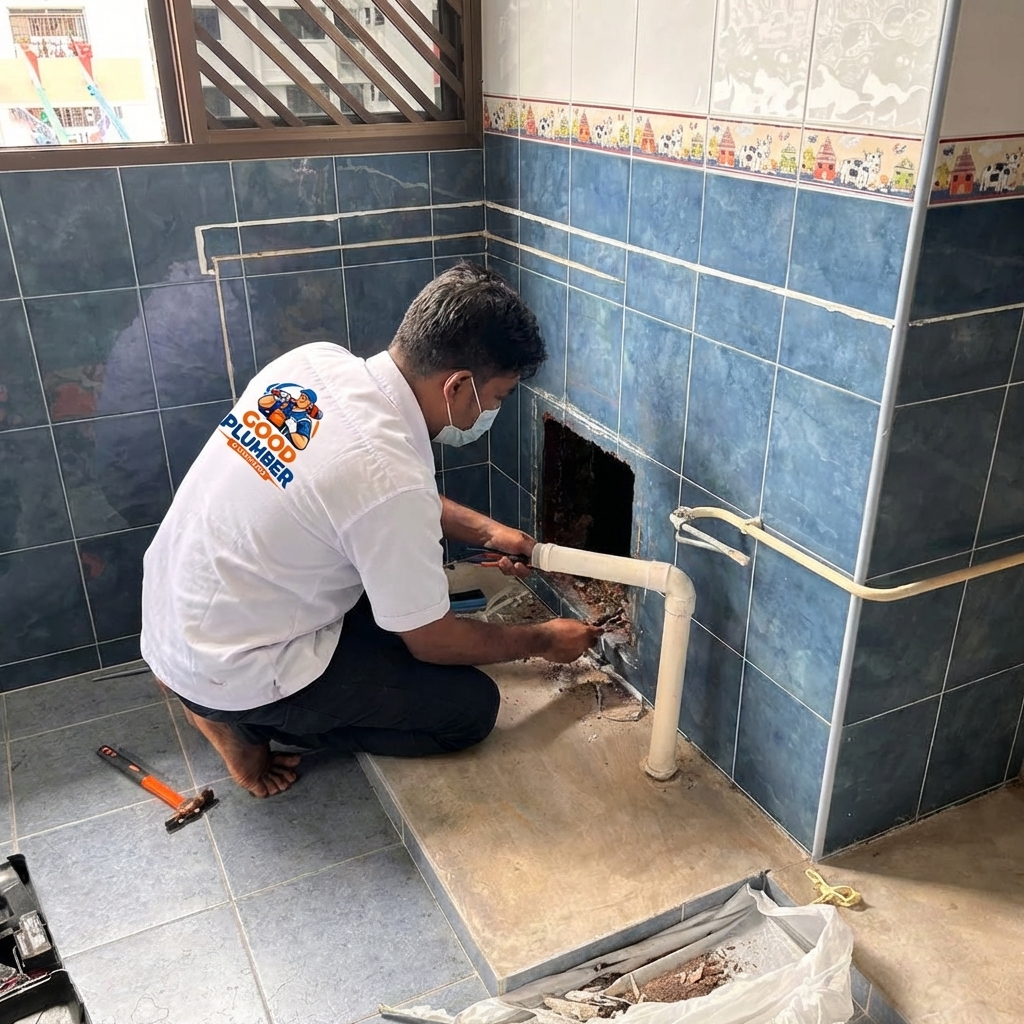
Full House Water Heater Installation in Taman Putra Prima
The homeowner had just moved into a semi-D in Taman Putra Prima. The house was about 8 years old and had never had water heaters installed — the previous owner apparently preferred cold showers. The new owner, unsurprisingly, did not. They wanted instant water heaters in all three bathrooms: the master bathroom upstairs, the family bathroom upstairs, and the guest bathroom downstairs.
They had already purchased two Panasonic DH-3RL1 units and one Joven SA10e from a hardware store on a promotion. My job was the installation — mounting, plumbing connections, electrical connections, earthing, and making sure all three worked properly without affecting each other's water pressure.
In a typical Puchong semi-D, water pressure comes from a roof tank gravity-fed system. The pressure at each outlet depends on the vertical distance between the tank and the tap — which means ground floor bathrooms get more pressure than upper floor ones, and running multiple heaters simultaneously can cause pressure drops and temperature fluctuations.
This is the most common complaint I hear from homeowners after a water heater installation: "The water goes hot and cold when someone uses another tap." Nine times out of ten, it is a pressure balancing issue that was not addressed during installation.
For this house, I needed to ensure that each water heater received adequate and consistent flow regardless of what the other two were doing.
3.6kW instant heater with built-in ELCB. Feeds rain shower and handheld shower via mixer.
Same model as master. Feeds single shower point. Compact mounting above the shower area.
Storage-type 10L heater. Chosen for the guest bath where consistent temperature matters more than instant flow.
The two upstairs bathrooms already had cold water supply points near the shower areas, so I did not need to run new supply lines for those. I installed isolation valves on each supply point so that individual heaters can be maintained without shutting off the whole house.
The ground floor guest bathroom required a new hot water pipe run from the heater mounting position to the shower mixer — about 3 metres of 15mm PPR pipe routed along the wall and concealed behind the vanity cabinet. The homeowner preferred not to hack the walls, so we ran the pipe externally with neat PVC trunking to keep it tidy.
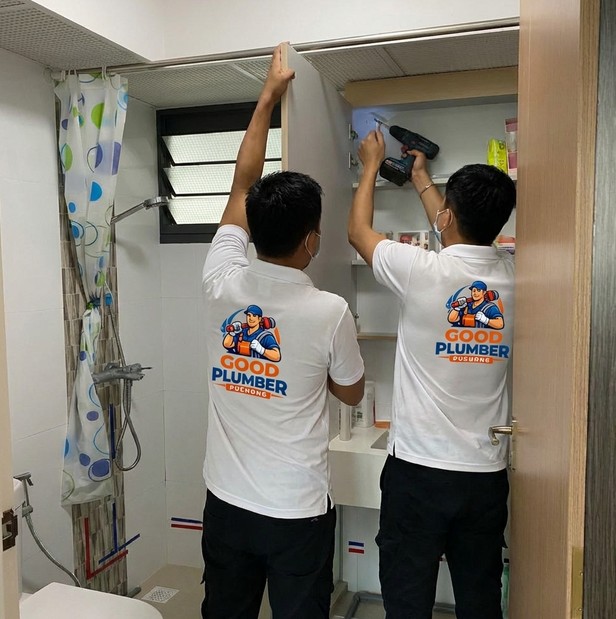
Both Panasonic units were wall-mounted directly above the shower area in their respective bathrooms, following the manufacturer's clearance requirements — minimum 1.8 metres from floor level and at least 150mm from the ceiling. I used stainless steel screws and wall plugs rated for the tile and masonry behind them. Water heaters falling off walls is more common than people think, usually because the installer used the screws that came in the box without checking the wall type.
The Joven storage unit downstairs weighs about 12kg when full, so I mounted it on a reinforced bracket anchored into the concrete wall behind the tiles, not just the tile surface.
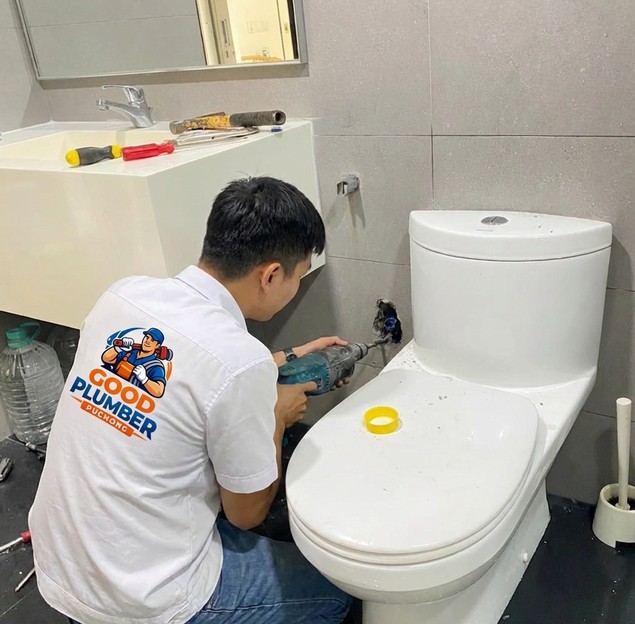
Each water heater needs its own dedicated electrical circuit — this is not optional, it is a safety requirement. I verified that the existing DB (distribution board) had spare MCBs (miniature circuit breakers) for the two upstairs units. The guest bathroom needed a new 20A circuit run from the DB, which I routed through PVC conduit along the ceiling and down the wall.
All three units were connected with proper earthing. The two Panasonic units have built-in ELCB (earth leakage circuit breakers), but I always check that the earth continuity is actually working — a built-in ELCB is useless if the earthing wire is not properly connected or if the house earth point is faulty. I tested each unit with an earth leakage tester to confirm trip response within the required time.
This was the critical step. I installed a 15mm pressure reducing valve on the main supply line feeding the upstairs bathrooms, set to 2.0 bar. This ensures consistent pressure to both upstairs heaters regardless of demand fluctuations elsewhere in the house. For the downstairs Joven unit, the gravity pressure from the roof tank was already adequate — the vertical distance gives roughly 0.5 bar, which is within the unit's operating range.
I then ran a simultaneous test: all three showers running at the same time, for 10 minutes. Temperature was stable at each point, no fluctuation, no cold spikes. The homeowner stood under the master bathroom shower during the test while I turned the other two on and off — they confirmed zero temperature change.
I walked the homeowner through each unit's controls — temperature adjustment, the ELCB test button (which should be pressed monthly), and the isolation valve location for each heater. I also explained the difference between the instant units and the storage unit: the Joven in the guest bathroom needs about 15 minutes to heat up from cold, while the Panasonic units deliver hot water immediately but require minimum flow to activate.
A common question homeowners ask is why not just install the same unit everywhere. The answer comes down to usage patterns:
Matching the heater type to the bathroom's usage pattern means every user in the house gets consistent hot water without overspending on equipment or electricity.
This project drew on our water heater expertise. If you are considering a similar installation or need heater repairs, see these pages:
WhatsApp us your bathroom layout and we will recommend the right heater type and give you an honest quote.
WhatsApp Us — 016-489 2821